
Organized by
Pleach India Foundation & Cotton University, Guwahati
Concept Note
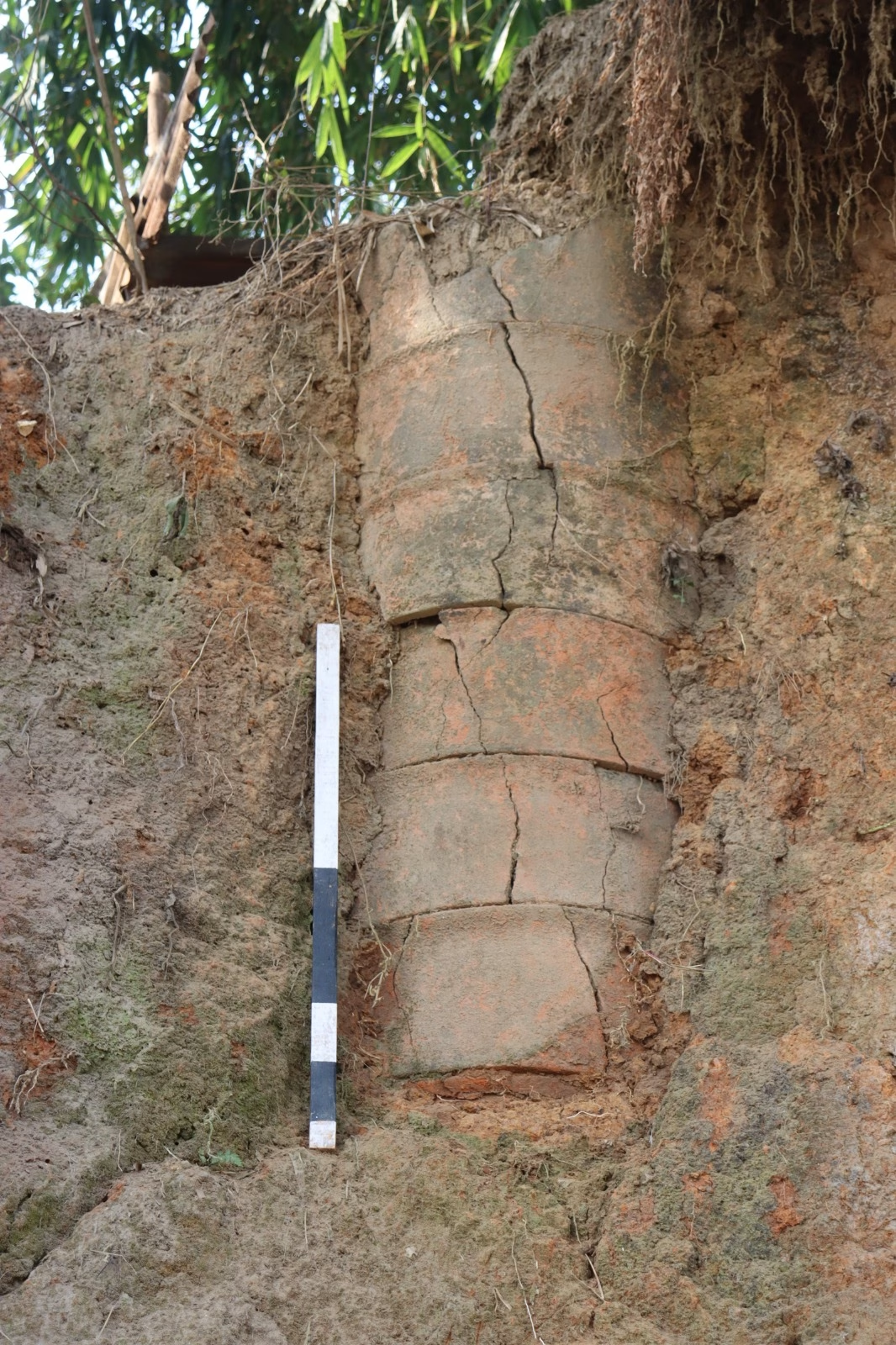
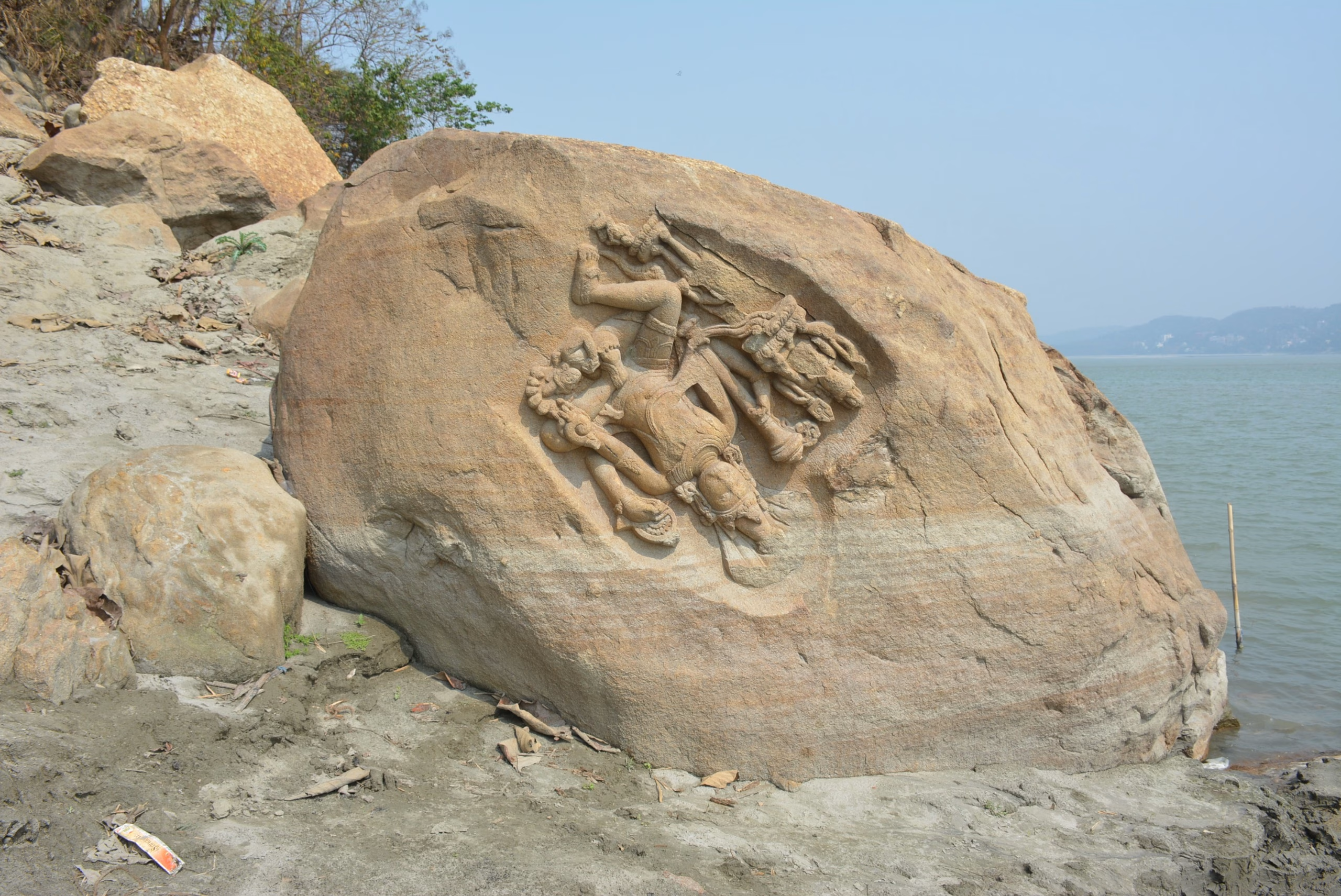
India’s heritage is a living and evolving resource, shaped by the pressures of urbanisation, climate change, migration, tourism, development and changing identities. Managing it today requires approaches that combine rigorous scholarship with community participation, policy, conservation and new technologies.
"The Future of the Past: Managing India’s Heritage in a Changing Present" brings together archaeologists, historians, conservators, museum professionals, policymakers and community practitioners to explore how India’s tangible and intangible heritage can be documented, protected and made meaningful for future generations. The seminar is held in the spirit of World Heritage Week, reaffirming our shared responsibility to safeguard the past.
The seminar also marks ten years of Pleach India Foundation's "Preserve Heritage for Posterity" (PHP), its community-based heritage documentation and conservation initiative and ten years of teaching-learning at the Department of Archaeology, Cotton University, which has contributed to archaeological teaching, research and professional training in Northeast India.
Bringing these experiences together, the seminar will reflect on the achievements, challenges and future of heritage management in India, with particular attention to community participation, sustainability, digital documentation, ownership and climate resilience.
"The Future of the Past: Managing India’s Heritage in a Changing Present" brings together archaeologists, historians, conservators, museum professionals, policymakers and community practitioners to explore how India’s tangible and intangible heritage can be documented, protected and made meaningful for future generations. The seminar is held in the spirit of World Heritage Week, reaffirming our shared responsibility to safeguard the past.
The seminar also marks ten years of Pleach India Foundation's "Preserve Heritage for Posterity" (PHP), its community-based heritage documentation and conservation initiative and ten years of teaching-learning at the Department of Archaeology, Cotton University, which has contributed to archaeological teaching, research and professional training in Northeast India.
Bringing these experiences together, the seminar will reflect on the achievements, challenges and future of heritage management in India, with particular attention to community participation, sustainability, digital documentation, ownership and climate resilience.
Download Seminar Brochure
Download the complete concept note, sub-themes, registration details, and abstract submission guidelines for the national seminar.
Call for Papers
Key Seminar Themes
We invite abstracts and papers from scholars, researchers, archaeologists, conservators, museum professionals, and heritage practitioners on the following core sub-themes:
1
Managing Heritage in the Face of Climate Change and Urbanisation
2
Community Participation and Living Heritage
3
Digital Documentation, GIS, AI and Emerging Technologies in Heritage Management
4
Heritage Policy, Law and Institutional Frameworks
5
Museums, Collections and Public Archaeology
6
Sustainable and Responsible Heritage Tourism
7
Teaching and Training in Archaeology: Building Future Custodians of Heritage
Key Information
Event Details
Venue
Cotton University, Guwahati, Assam
Date
19th – 20th November 2026
Abstract Submission Deadline
05-10-2026
Full Paper Submission Deadline
31-10-2026
Registration Fee
₹1000
Mode
In-person
Who Can Attend
Students, Scholars, Researchers, Archaeologists, Conservators, Museum Professionals, and Heritage Practitioners
Coordinators
Dr. Manjil Hazarika
Associate Professor, Department of Archaeology, Cotton University
manjil.hazarika@cottonuniversity.ac.in
+91 7002210391
Dr. Sanathana Y S
Director (Research & Projects), Pleach India Foundation
sanathana@pleachindia.com
+91 8217408336
Watch this space for exciting updates!