
Why We Are Writing....
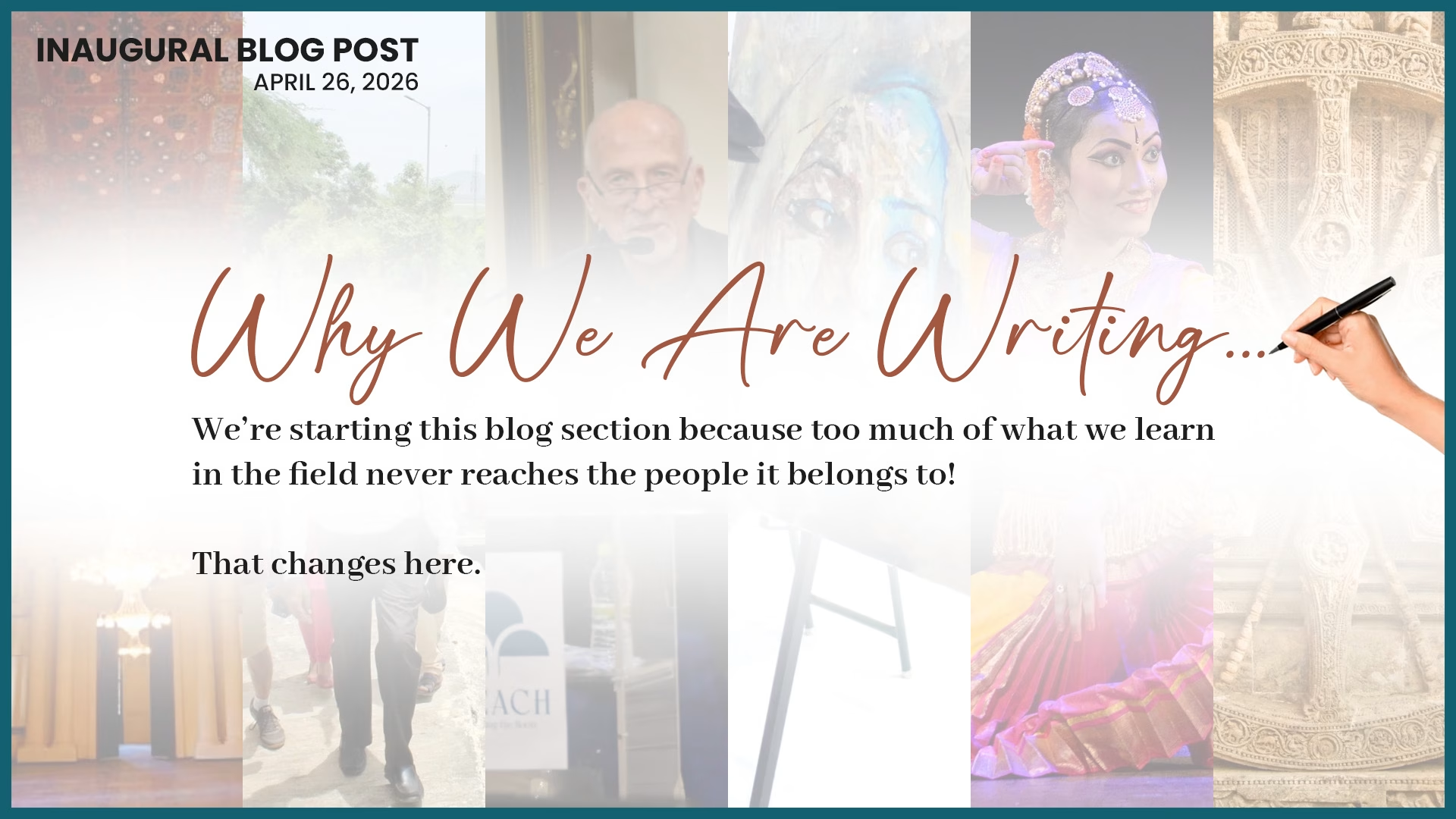
“A people without the knowledge of their past history, origin and culture is like a tree without roots.”
- Marcus GarveyEvery heritage practitioner carries two kinds of knowledge. The first lives in published papers, seminar proceedings and archival records. The second lives in quieter places.
In a conversation with a local custodian of a rural monument. In the moment a schoolchild first holds a replica artefact and asks who made this and why? At Pleach India Foundation, we have spent over a decade accumulating both kinds and this blog section is where they finally meet.
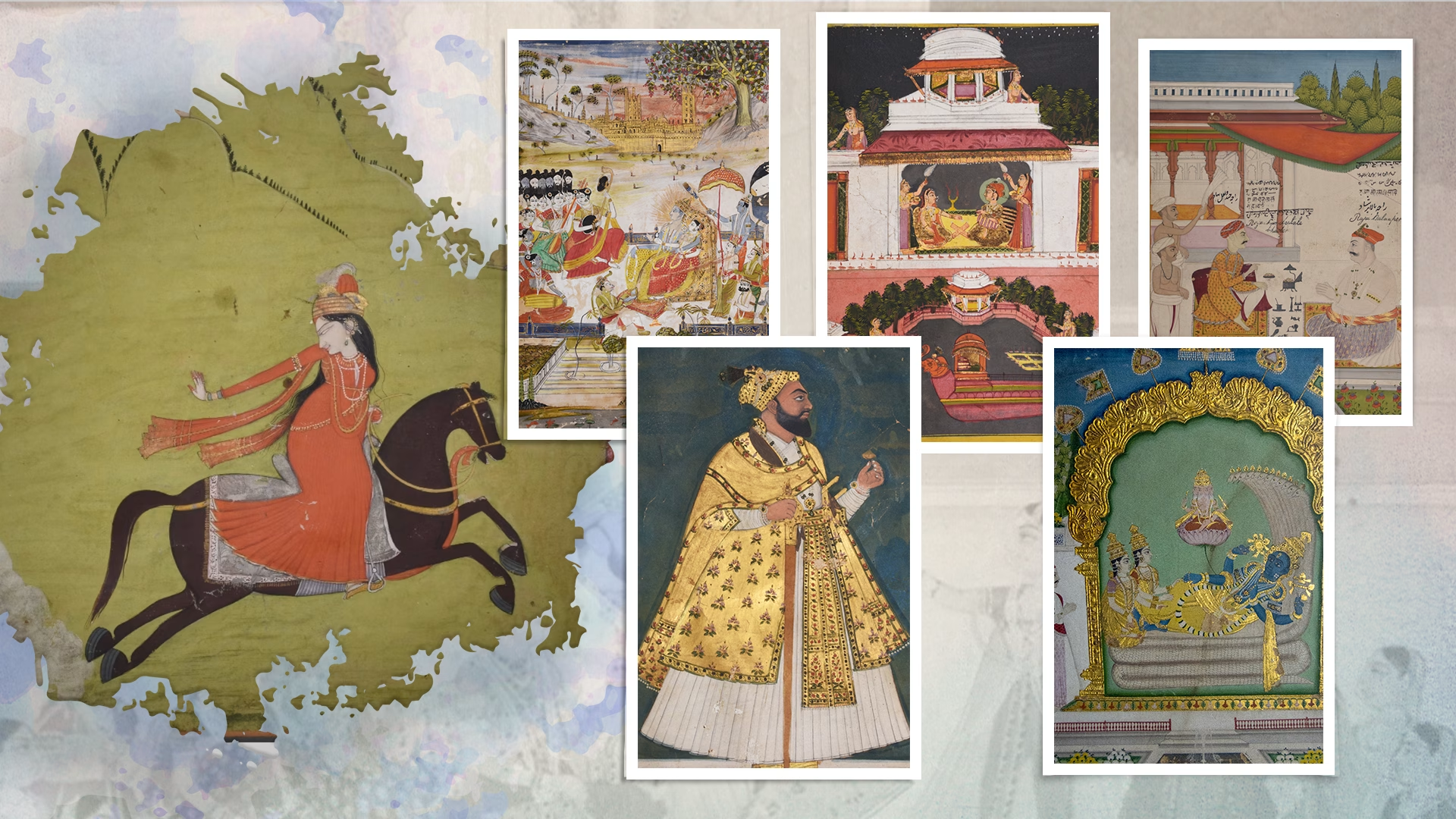
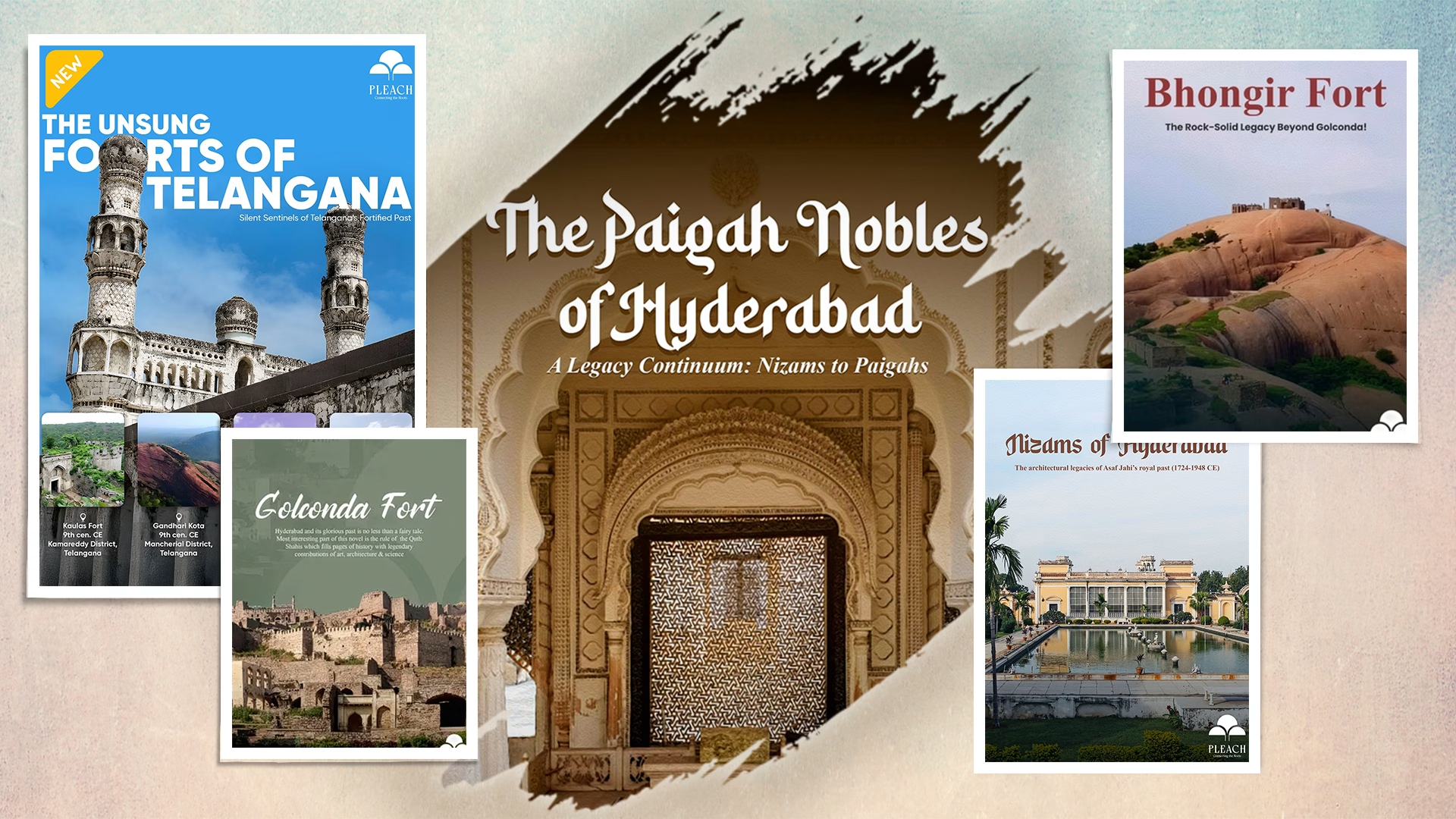
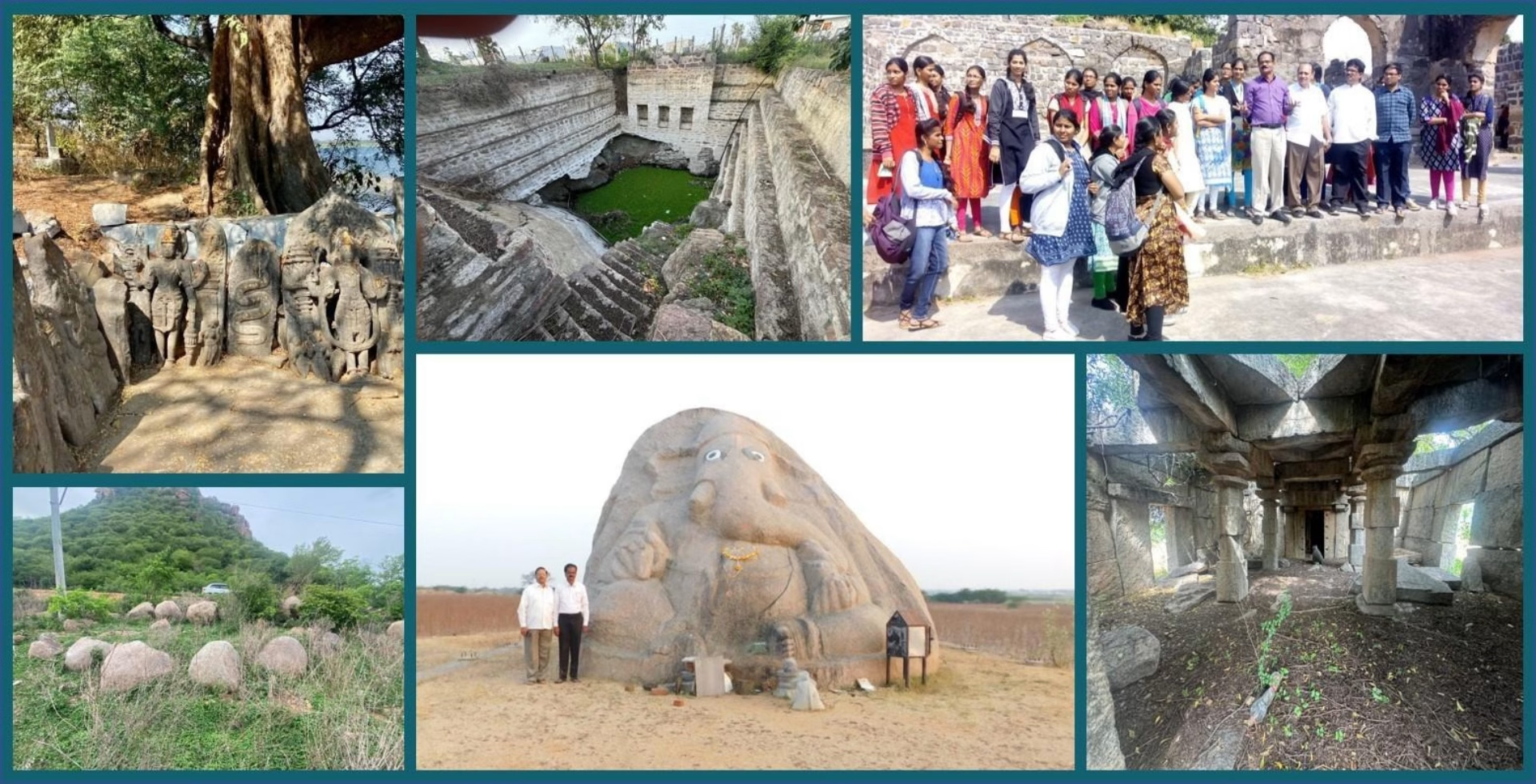
Since our founding in 2014 (formerly CCVA), our work has been anchored in the tangible heritage of India particularly the rich, under-examined traditions of the Deccan. We have documented Deccani miniature paintings from the State Archaeology Museum. We have built a Mini Museum of artefacts that tells quiet, local stories. We have taken heritage awareness into village communities through Preserve Heritage for Posterity (PHP). We have convened scholars from across the country through Pleach Talks and national seminars. In April 2026, we host a seminar on Schools of Art in India, awarding the Pleach–Ananda Coomaraswamy Award for outstanding research.
Across all of this work, one gap has persisted: the space between what we know in the field and what reaches the public. This blog is our attempt to close it.
WHY HERITAGE REMAINS INVISIBLE
Heritage in India exists in a peculiar tension. It is everywhere in the carved brackets of a neighbourhood temple ruins, in the water-harvesting geometry of a stepwell, in the brush vocabulary of a Deccani painter working four centuries ago. And yet, for most people, it remains invisible.
Not because they lack curiosity. But because the knowledge systems that could ignite that curiosity are locked inside institutions or in the hands of specialists who rarely find the time to translate their work into language that rewards a general reader’s attention. The result is a public that appreciates heritage in the abstract but cannot quite touch it.
We believe that is a problem worth naming directly. And one worth solving not by simplifying heritage, but by narrating it honestly.
WHAT YOU WILL FIND HERE
This blog section will be a record of Pleach’s work, written from the inside. We will take you into our documentation projects what it actually takes to photograph, describe and contextualise a miniature painting in a museum environment where light, access and institutional protocols are all in constant negotiation.
We will reflect on our Preserve Heritage for Posterity (PHP) outreach sessions, we will think aloud about the challenges of running a Mini Museum, the ethics of collecting, the questions of provenance, the particular joy and responsibility of display. We will share notes from Pleach Talks and our national seminars, translating scholarly conversations into something accessible without stripping them of their intellectual seriousness.
THE LARGER QUESTIONS WE CARRY
We will also be honest about the questions that do not have tidy answers. What does it mean to preserve heritage in a rapidly urbanising Hyderabad? Who decides which past is worth remembering and whose account of it is treated as authoritative? How do we engage communities as genuine participants in their own cultural inheritance rather than as audiences for someone else’s expertise? Etc.
These are not rhetorical questions. Pleach has always carried them, quietly, in our internal conversations. This blog section is where we begin to carry them publicly.
AN INVITATION
We write not to document what we do, but because we believe that a thoughtful, informed public is the most durable form of heritage protection there is.
Monuments can be gazetted and forgotten. Traditions can be performed without being understood. What truly lasts is a society that has been helped to recognise that the stepwell in the neighbourhood, the miniature painting in the museum, the medieval fort crumbling at the edge of the city, are not relics of a separate past but living arguments about who we are.
We hope you will read with us.
Disagree with us.
Ask questions that push our thinking.
Tell us about the heritage in your neighbourhood that no one is talking about yet. Point us to the custodians, the local historians, the practising craftspersons who deserve more attention than they receive.
Our field notes are now open. Welcome.
Why We Are Writing....
“A people without the knowledge of their past history, origin and culture is like a tree without roots.”
- Marcus GarveyEvery heritage practitioner carries two kinds of knowledge. The first lives in published papers, seminar proceedings and archival records. The second lives in quieter places.
In a conversation with a local custodian of a rural monument. In the moment a schoolchild first holds a replica artefact and asks who made this and why? At Pleach India Foundation, we have spent over a decade accumulating both kinds and this blog section is where they finally meet.
Since our founding in 2014 (formerly CCVA), our work has been anchored in the tangible heritage of India particularly the rich, under-examined traditions of the Deccan. We have documented Deccani miniature paintings from the State Archaeology Museum. We have built a Mini Museum of artefacts that tells quiet, local stories. We have taken heritage awareness into village communities through Preserve Heritage for Posterity (PHP). We have convened scholars from across the country through Pleach Talks and national seminars. In April 2026, we host a seminar on Schools of Art in India, awarding the Pleach–Ananda Coomaraswamy Award for outstanding research.
Across all of this work, one gap has persisted: the space between what we know in the field and what reaches the public. This blog is our attempt to close it.
WHY HERITAGE REMAINS INVISIBLE
Heritage in India exists in a peculiar tension. It is everywhere in the carved brackets of a neighbourhood temple ruins, in the water-harvesting geometry of a stepwell, in the brush vocabulary of a Deccani painter working four centuries ago. And yet, for most people, it remains invisible.
Not because they lack curiosity. But because the knowledge systems that could ignite that curiosity are locked inside institutions or in the hands of specialists who rarely find the time to translate their work into language that rewards a general reader’s attention. The result is a public that appreciates heritage in the abstract but cannot quite touch it.
We believe that is a problem worth naming directly. And one worth solving not by simplifying heritage, but by narrating it honestly.
WHAT YOU WILL FIND HERE
This blog section will be a record of Pleach’s work, written from the inside. We will take you into our documentation projects what it actually takes to photograph, describe and contextualise a miniature painting in a museum environment where light, access and institutional protocols are all in constant negotiation.
We will reflect on our Preserve Heritage for Posterity (PHP) outreach sessions, we will think aloud about the challenges of running a Mini Museum, the ethics of collecting, the questions of provenance, the particular joy and responsibility of display. We will share notes from Pleach Talks and our national seminars, translating scholarly conversations into something accessible without stripping them of their intellectual seriousness.
THE LARGER QUESTIONS WE CARRY
We will also be honest about the questions that do not have tidy answers. What does it mean to preserve heritage in a rapidly urbanising Hyderabad? Who decides which past is worth remembering and whose account of it is treated as authoritative? How do we engage communities as genuine participants in their own cultural inheritance rather than as audiences for someone else’s expertise? Etc.
These are not rhetorical questions. Pleach has always carried them, quietly, in our internal conversations. This blog section is where we begin to carry them publicly.
AN INVITATION
We write not to document what we do, but because we believe that a thoughtful, informed public is the most durable form of heritage protection there is.
Monuments can be gazetted and forgotten. Traditions can be performed without being understood. What truly lasts is a society that has been helped to recognise that the stepwell in the neighbourhood, the miniature painting in the museum, the medieval fort crumbling at the edge of the city, are not relics of a separate past but living arguments about who we are.
We hope you will read with us.
Disagree with us.
Ask questions that push our thinking.
Tell us about the heritage in your neighbourhood that no one is talking about yet. Point us to the custodians, the local historians, the practising craftspersons who deserve more attention than they receive.
Our field notes are now open. Welcome.